For several decades, we have witnessed exponential development in new technologies.
While virtual connections flourish across the globe, “physical space” as a gathering place is increasingly eclipsed by these new methods of relational interaction.
The office is no exception: working from home, encouraged by remote work policies, is a phenomenon questioning the role of the traditional physical office and influencing socio-professional relationships.
Globally, many business leaders favor this approach, which they consider an effective way to combine employee autonomy and productivity.
Many questions then arise, both regarding employee freedom and their position within the company, and concerning the role of office space in full transformation. Is the modern office, which comes in multiple forms (flex-office, co-working spaces), able to offer an organizational method that meets the demands of modernity and individual well-being?

It is clear that working from home has allowed employees to enjoy greater flexibility in their daily organization.
However, we are beginning to see harmful consequences for workers and their professional relationships. Feelings of isolation, loss of connection with management, lack of cohesion, and erosion of the sense of belonging to the company have now become the adverse effects of this new organization of the working world.
The idea that mental concentration would be better is also relative: according to a recent survey, isolated workers take fewer breaks during the day, but this near absence of relaxation moments often leads to a loss of motivation, with work becoming more “laborious” and, ultimately, constraining.
At the same time, the absence of direct exchanges during the day would impact the quality of the work itself, which is now driven by a single mind, contradicting corporate values such as mutual support and collaboration.
If, indeed, the traditional office (individual closed office) can no longer exist, the office as a physical space for dialogue must continue to survive, both for employee well-being and for the survival of companies.
The “flex office,” born in the 1990s in the United States to address the shortcomings of the traditional office, presents itself as an intelligent response to this question of social connection, while meeting the needs created by new technology and the evolution of the working world.
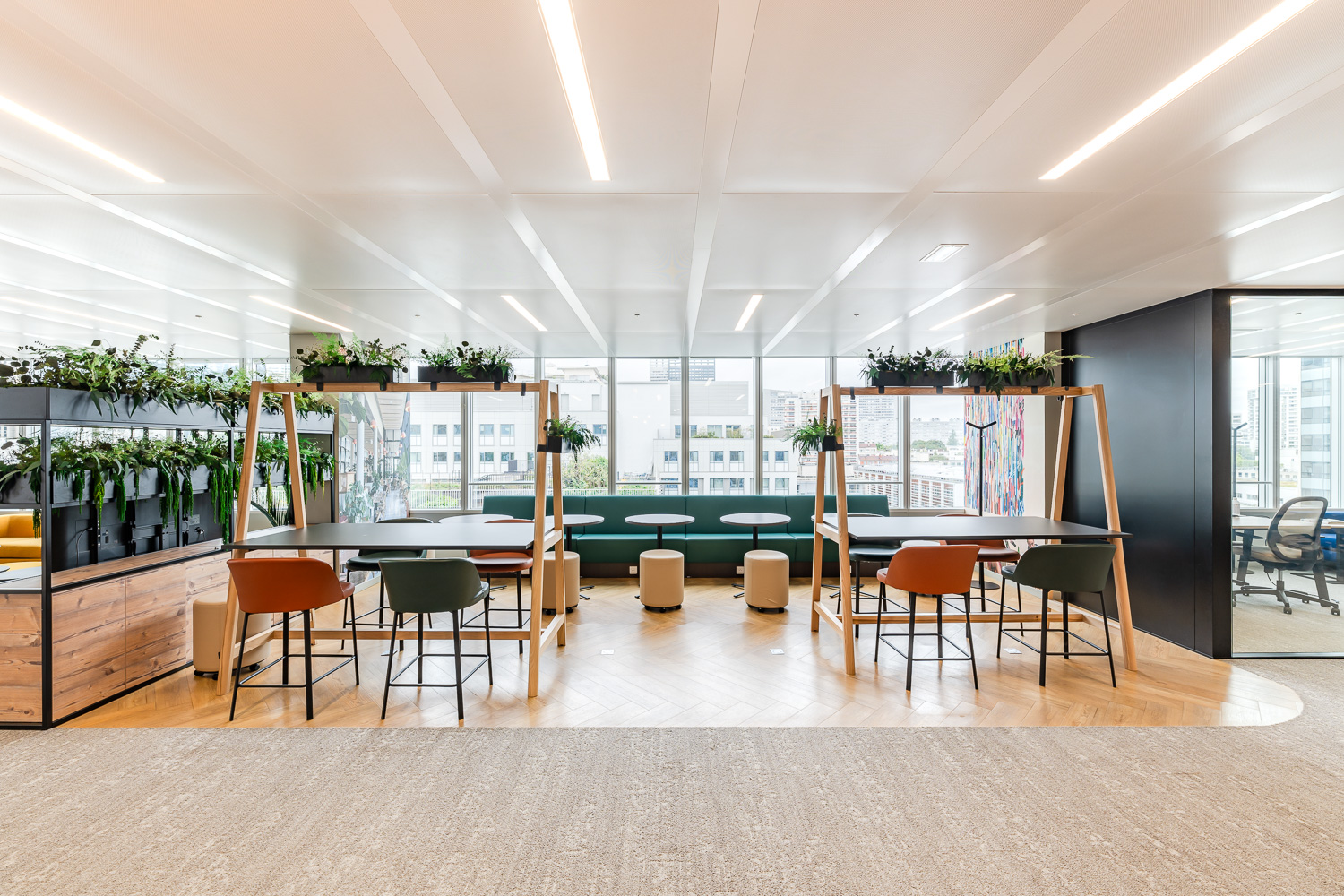
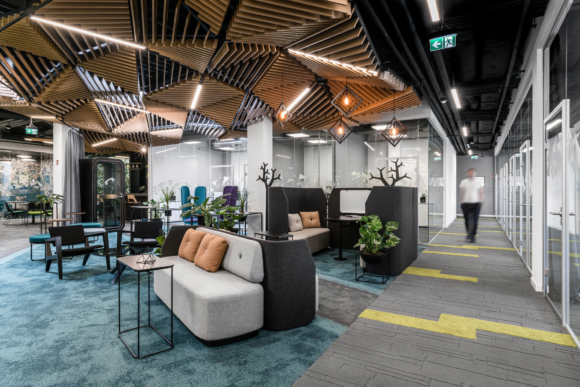
A blend of closed offices and interconnected “open space” areas, the flex office aims to bring people together while individualizing relationships: by providing self-service spaces accessible to all, workers are free to choose their workstation according to the nature of their requirements. Thus, the average user can opt for an open office, promoting exchange, while also choosing a closed office, ensuring the concentration and confidentiality necessary to accomplish a different task.
In this way, by offering alternation and mobility for each user, the office fulfills the essential function of a modern company: flexibility.
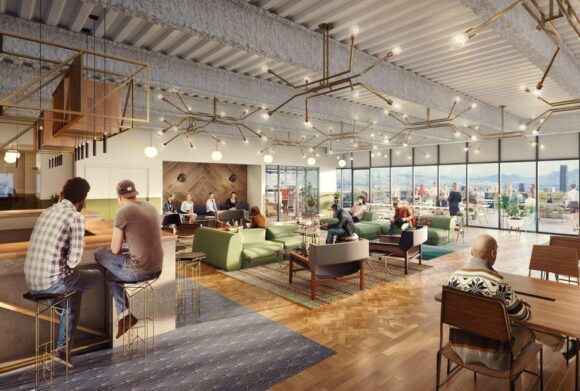
Born from this reflection on social connection and access to new technologies in the professional world, co-working spaces were designed with the spirit of bringing together workers (freelancers and employees) in interconnected locations. These spaces are located in geographical areas separate from the workplace. The advantage of these spaces is that they combine high technology and access to well-being, while fostering interdisciplinary connections beyond traditional corporatism.
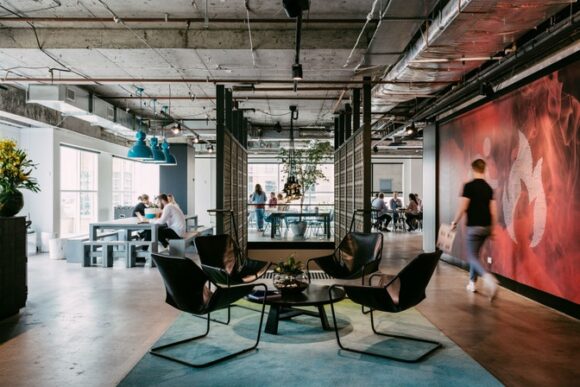
The provision of wellness areas such as gyms or relaxation spaces within certain companies can also be considered as additional awareness on the part of management: by integrating activities traditionally outside the working world, the office acquires a much stronger attractive power which, on the one hand, reconciles workers with the notion of pleasure but also contributes to their motivation.
The office can thus become an instrument of personal fulfillment resonating with different sensibilities.
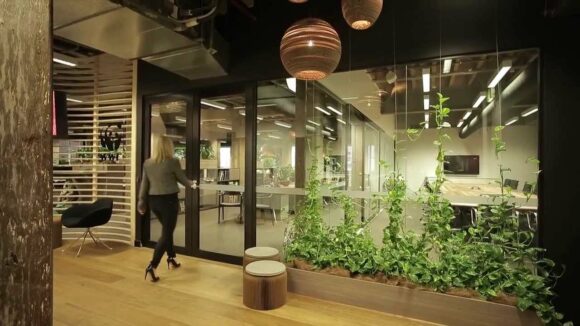
The question of remote work has also raised numerous issues in the world of contemporary architecture. For millennia, physical space has been the sole guarantor of commercial relationships.
In this context of deteriorating social connection, space as a functional and aesthetic object finds itself becoming fragile.
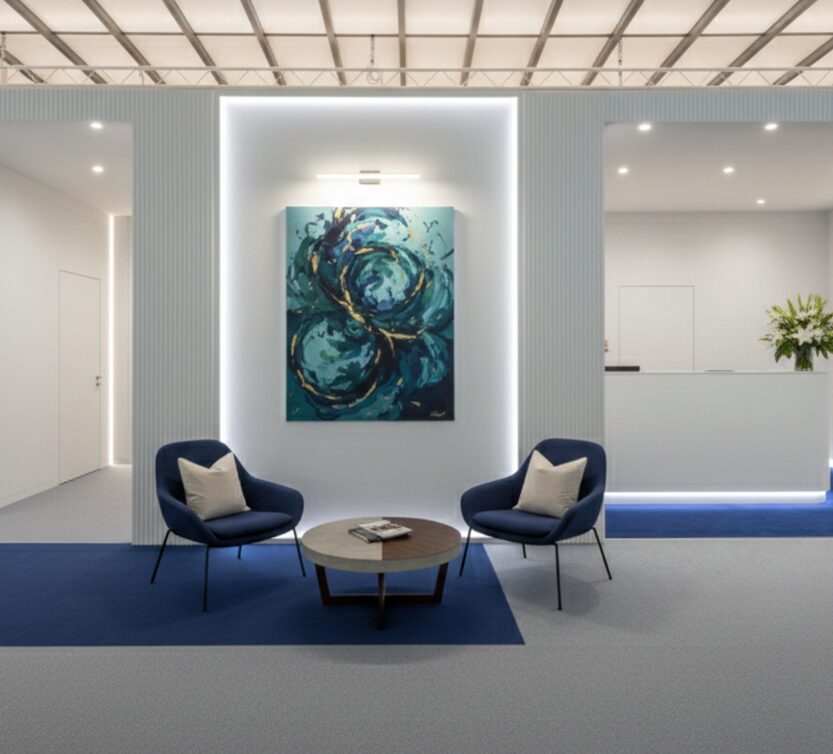
Fortunately, this sociological observation has awakened a major awareness among interior architects who have made possible the return to a valorization of architectural space through the creation of modern and design offices, combining comfort and harmony.
The proliferation of corporate gardens, along with the advent of interior green walls, is an indicator likely to ensure a bright future for the office, as it represents an effective means of accessing well-being while being a showcase for architectural and environmental modernity.
Furthermore, the development of new technologies within meeting rooms facilitates internal and external exchanges, creates group dynamics, and develops creativity.
Thus, layout methods fluctuate, furniture gains in comfort and elegance, and technology is expressed through “aesthetic” touches. The ephemeral nature generated by economic flexibility is even an additional asset for offering modular and interchangeable architecture, in line with the evolution of the working world.
The attitude of business leaders, combined with the growing efforts of architects in terms of creativity, gives hope that the “office” will remain the cornerstone of the business world for many more decades.
Florence A.

Director CLUE ME
Director CLUE ME